
Most brides spend months choosing a lehenga or wedding dress. They tour venues, taste cake, and agonize over flower arrangements. Then, two weeks before the wedding, they book a makeup artist in a panic, often the first available name they find on Instagram.
That rush is one of the most expensive mistakes a bride makes. Not in money alone, but in regret. Wedding photos last a lifetime. The makeup in those photos lasts forever, too.
At Shagufta Bridal in Islamabad and Rawalpindi, we have worked with hundreds of brides across Pakistani wedding seasons, from mehndi and barat to nikah and walima. We have seen what goes wrong when the artist selection process is rushed, uninformed, or based on the wrong criteria. This guide exists to change that.
Below are the most common mistakes brides make when choosing a makeup artist, and exactly how to avoid every single one.
Booking Without Reviewing the Artist’s Full Portfolio
A profile photo or one viral reel on Instagram is not a portfolio. It is a highlight. Every artist has a best day. What you need to see is consistency across different skin tones, event types, and lighting conditions.
Before booking any bridal makeup artist in Islamabad or Rawalpindi, request a portfolio that includes:
- Multiple skin tones: Pakistani skin ranges from fair to deep wheatish, and your artist must demonstrate mastery across that full spectrum
- Different event types: mehndi looks differ from barat looks; nikah makeup is separate from walima glam
- Actual client photos, not just styled shoots with professional lighting and models
- Before-and-after images: these reveal technique, blending skill, and how well the artist works with real skin texture
If an artist only shares one type of look, always smoky eye, always heavy contouring, that is a specialization, not a skill set. A qualified bridal makeup artist adapts to the bride, not the other way around.
Choosing Based on Price Alone
The cheapest option and the most expensive option are both the wrong criteria for selection. Price tells you one thing: the artist’s confidence in their own market value. It does not tell you about skill, hygiene standards, product quality, or whether the artist will show up on time on your wedding day.
In Islamabad and Rawalpindi, bridal makeup packages range from PKR 15,000 to well above PKR 100,000 depending on experience, brand reputation, and what is included. When comparing quotes, ask specifically what each package covers:
- Is a trial (practice session) included?
- Does the artist use professional-grade, long-wear products?
- Are touch-up kits provided?
- Is the price per event, or does it cover the full wedding (mehndi, barat, nikah, walima)?
A bride who selects an artist at PKR 12,000 and skips the trial walks in blind on the most photographed day of her life. A bride who pays PKR 60,000 for an experienced, specialized bridal artist walks in knowing exactly how she will look, and loves it.
Skipping the Trial Session
This is the single most damaging mistake on this list. Skipping a bridal makeup trial is the equivalent of wearing your wedding outfit for the first time on barat day, there is no room to fix anything.
A makeup trial is not a luxury. It is a mandatory step in selecting your artist. The trial session allows you to:
- Test how products perform on your specific skin type (dry, oily, combination, sensitive)
- Evaluate how long the look holds after three to four hours
- Identify any allergic reactions to products before the wedding day
- Provide feedback and refine the look without pressure
- Build comfort and communication with your artist
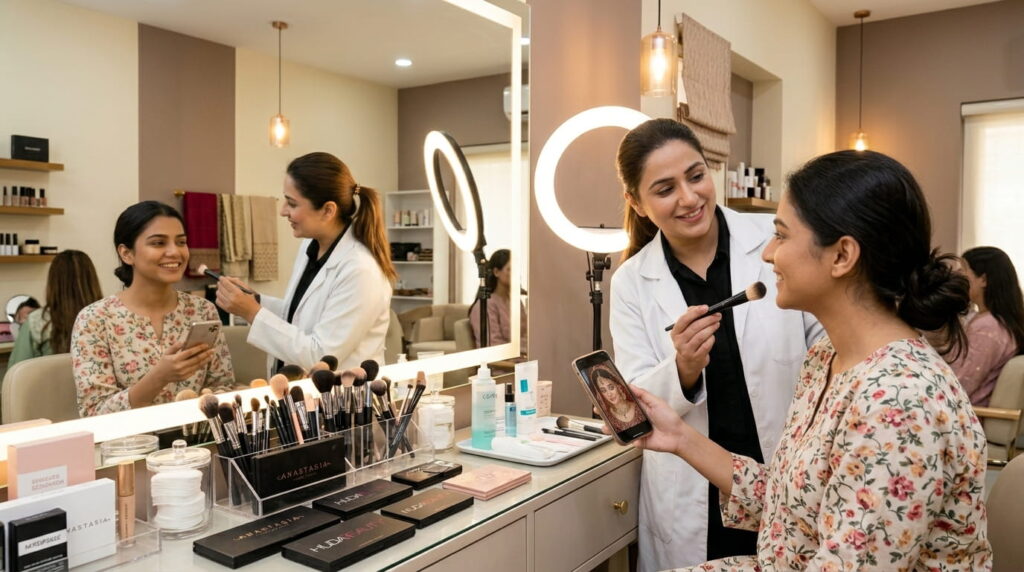
At Shagufta Bridal, every bridal client completes a trial session before the final booking is confirmed. This protects the bride, sets clear expectations, and ensures the artist understands the exact look, finish, and intensity the bride wants. If any artist you approach refuses to offer a trial or discourages you from booking one, that itself is a disqualifying signal.
Showing Heavily Filtered or Edited Inspiration Images
Pinterest and Instagram are flooded with bridal images that have been retouched to remove every pore, texture, and shadow. Brides bring these images to consultations expecting the makeup artist to replicate the look, without realizing that the skin in the image was digitally altered after photography, not created by makeup.
This creates two problems. First, it sets an unrealistic baseline for what makeup on real skin looks like. Second, it breaks the communication between bride and artist because the reference image describes something that does not exist.
When collecting reference images for your makeup consultation, choose images that:
- Feature real brides in real wedding settings (not editorial or campaign shoots)
- Show skin with visible natural texture
- Come from Pakistani or South Asian bridal contexts where skin tone and aesthetic match yours
- Highlight specific elements you like, the eye shape, the lip colour, the finish, rather than a full retouched look
Be specific with your artist. Tell them: “I want the eye definition from this image, the skin finish from this one, and I want to avoid heavy contour.” That level of specificity produces results. Showing one filtered image and saying “like this” does not.
Not Checking Whether the Artist Specialises in Bridal Work
Not every skilled makeup artist is a bridal specialist. Event makeup, fashion makeup, commercial makeup, and bridal makeup are distinct disciplines. A talented artist who excels at editorial shoots or party glam does not automatically understand what bridal makeup requires.
Bridal makeup in Pakistan demands a specific skill set:
- Longevity: wedding events in Pakistan run long, often eight to fourteen hours. The makeup must hold through heat, humidity, emotional moments, and continuous photography
- Multi-camera lighting knowledge: outdoor, indoor, flash, and natural light all interact differently with foundation shades and finishes
- Layered event sequencing: mehndi, barat, nikah, and walima each require a different level of intensity, and the artist must know how to shift between them
- Skin prep discipline: professional skin preparation before application makes the difference between makeup that sits flat at 6:00 PM and makeup that looks fresh in midnight photographs
Ask any artist you consider: “How many bridal clients do you take per wedding season?” and “Can you describe your process for making makeup last through a full barat?” An experienced bridal specialist answers both questions without hesitation.
Ignoring Product Quality and Hygiene Standards
The products used on your skin on your wedding day matter more than most brides realize. Low-quality products oxidize (turn orange-toned) within hours, crease under the eyes, and do not photograph cleanly. Products shared across multiple clients without proper sanitization create serious skin hygiene risks.
When evaluating a makeup artist, ask directly:
- Which foundation brands do you use for Pakistani skin tones?
- Do you use individual, disposable mascara wands for each client?
- How do you sanitize your brushes and tools between clients?
- Are your products within their expiry dates?
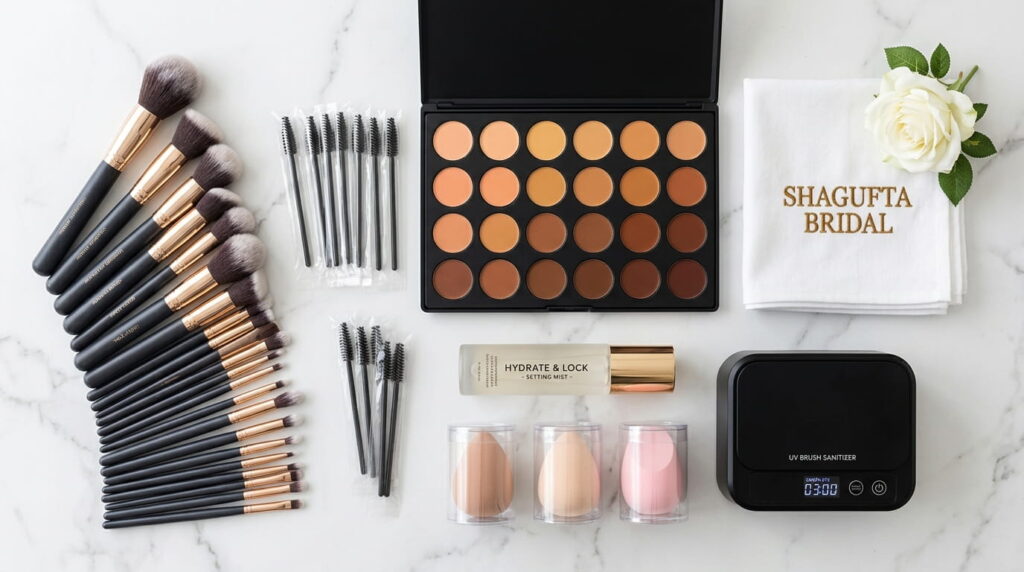
A professional bridal makeup artist uses products from reputable brands that are formulated for long wear, sweat resistance, and a range of undertones suited to South Asian skin. At Shagufta Bridal, product quality and sanitation standards are non-negotiable, because skin health on your wedding day is not a detail, it is a foundation.
Booking Too Late
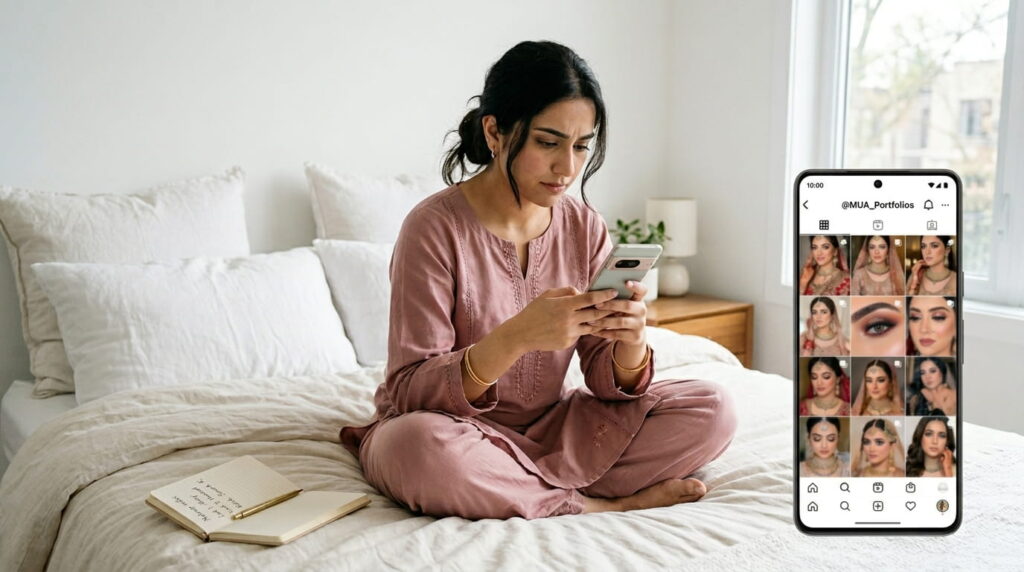
The best bridal makeup artists in Islamabad and Rawalpindi book months in advance, particularly during peak wedding season (October through February). Brides who begin the search sixty to ninety days before the wedding often find their preferred artists fully booked.
The consequences of late booking extend beyond availability. A rushed booking means:
- No time for a proper trial
- Less time for the artist to understand your skin type and concerns
- No opportunity to source specific products the bride requests
- Pressure on both sides to finalize details quickly
Begin your makeup artist search at least four to six months before your first wedding event. Conduct consultations, complete a trial, and lock the booking with a contract at least three months out. During peak season, extend that timeline to six months.
Not Discussing the Full Wedding Schedule Upfront
Your makeup artist needs to know your complete event timeline from the first consultation. The schedule, location, number of events, number of people requiring makeup, and travel requirements all affect pricing, logistics, and preparation time.
Brides who share this information late or not at all create unnecessary complications on the wedding day. Common issues include:
- The artist arriving without enough time to complete the full bridal party
- Makeup being rushed because the ceremony start time was not communicated
- Travel charges appearing in the final bill because venue location was not factored in
- The artist double-booked because a second event date was added without notice
At your first consultation, share your full wedding itinerary: event dates, start times, venue addresses, the number of people needing makeup at each event, and the look intensity you want for each occasion. This information allows the artist to plan properly and give you an accurate, complete quote upfront.
Ignoring Reviews and Client Testimonials
Social media follower counts are not a measure of skill or reliability. An artist with 80,000 Instagram followers and no verifiable client reviews is a risk. An artist with 5,000 followers and twenty detailed testimonials from real brides is a proven professional.
When researching a bridal makeup artist, look for:
- Reviews on Google Business, wedding directories, or Facebook
- Testimonials that mention specific details, skin type handled, event type, how long the makeup lasted
- Whether the artist has been tagged in real wedding photos by actual clients
- Any mention of punctuality, professionalism, and how they handled problems on the day
Ask the artist directly for two or three references, brides she worked with in the past six months. A confident professional with satisfied clients will provide references without hesitation.
Choosing an Artist Whose Aesthetic Does Not Match Yours
Every makeup artist has a signature style. Some artists lean toward heavy glamour: bold contour, dramatic lashes, high-shine highlights. Others specialize in soft, skin-forward looks with natural finishes. Most skilled artists can move across styles, but they still have a comfort zone.
The mistake brides make is booking an artist whose entire portfolio shows one aesthetic and expecting a completely different result. If every photo in the portfolio shows full glam with smoky eyes and you want dewy, minimal nikah makeup, have that conversation explicitly during the trial. Do not assume the artist will adapt.
Review the portfolio with your look in mind. Ask during the consultation: “Here is the finish and intensity I want. Do you have examples of similar work?” Then confirm the answer with a trial.
What a Qualified Bridal Makeup Artist Looks Like
To summarize the selection standard, a bridal makeup artist worth booking:
- Has a verified portfolio across multiple skin tones and event types
- Offers and encourages a trial session
- Uses professional, long-wear products and follows strict hygiene protocols
- Specializes in or has extensive experience with bridal makeup
- Is transparent about pricing and what each package includes
- Books in advance and manages their schedule with professionalism
- Communicates clearly, asks the right questions, and listens to the bride
At Shagufta Bridal, serving brides across Islamabad and Rawalpindi, every client receives a personalized consultation, a full trial session, and a bridal makeup experience that is planned from the first conversation to the final touch-up. The goal is always the same: you look like the best version of yourself, for every event, across every hour of your wedding.
Final Thoughts
Your wedding photographs will outlast every other detail of your wedding day. The flowers fade. The food is eaten. The decorations come down. But the photographs, and the face in those photographs, remain exactly as they were the moment the shutter clicked.
Choosing the right bridal makeup artist is not a cosmetic decision. It is a planning decision. Start early, ask the right questions, complete a trial, and choose an artist whose work, professionalism, and aesthetic match what you want on the most documented day of your life.
If you are a bride in Islamabad or Rawalpindi preparing for your wedding, Shagufta Bridal offers consultations, trial sessions, and full bridal makeup services for mehndi, barat, nikah, and walima.Visit shaguftabridal.com to book your consultation and begin your wedding makeup journey with confidence.
Frequently Asked Questions
How far in advance should I book a bridal makeup artist in Islamabad?
Book at least four to six months before your first wedding event. During peak wedding season (October to February), the most experienced artists fill their calendars six months or more in advance. Booking early also gives you time to complete a proper trial and make any adjustments before the wedding day.
Is a makeup trial really necessary, or can I skip it?
A trial is essential, not optional. It is the only way to confirm how products perform on your specific skin type, how long the look holds, and whether the artist understands your vision. Brides who skip trials are the most likely to be disappointed with their wedding day results.
How do I know if a makeup artist’s portfolio is genuine?
Look for tagged posts from real clients on social media rather than only styled shoots. Ask to see before-and-after images. Request references from recent brides and follow up with those brides directly. Genuine portfolios include variety — multiple skin tones, multiple event types, and real-world lighting conditions.
What questions should I ask during a makeup artist consultation?
Ask about their experience with bridal makeup specifically, which products they use and why, how they handle long-wear requirements for Pakistani wedding events, what is included in their package pricing, their policy for trials, and how they handle emergencies on the wedding day.
Can I bring my own products for the makeup artist to use?
Yes, but discuss this with the artist in advance. Bring any products you want used to the trial session so the artist can test compatibility with their technique and other products. Do not introduce new products on the wedding day itself — only use products that have already been tested on your skin.
How long does bridal makeup take on the wedding day?
For the bride alone, allow two to three hours for full bridal makeup application. If hair styling is included, add another sixty to ninety minutes. For a bridal party of four to six people, allocate four to six hours total. Discuss the timeline with your artist well in advance so everyone is ready before the ceremony begins.
What is the difference between bridal makeup and regular event makeup?
Bridal makeup is formulated and applied for longevity, photography performance, and emotional durability — meaning it must survive tears, hugs, heat, and twelve-plus hours of wear. Event makeup is often designed for a shorter appearance window. Bridal artists also understand how to adapt looks across multiple events within the same wedding, from mehndi to walima.