
Your makeup is only as good as the skin beneath it. Every bridal artist in Islamabad and Rawalpindi knows this truth, flawless foundation starts not with the brush, but with what happens before it ever touches your face. Prepare your skin correctly and makeup glides on, stays put, and photographs beautifully from the nikah to the walima. Skip the prep and even the best products crease, oxidise, or slide off by noon.
This guide covers everything, from the three-month skincare timeline to the exact morning-of routine, so you walk into your bridal chair with the healthiest, most radiant canvas possible.
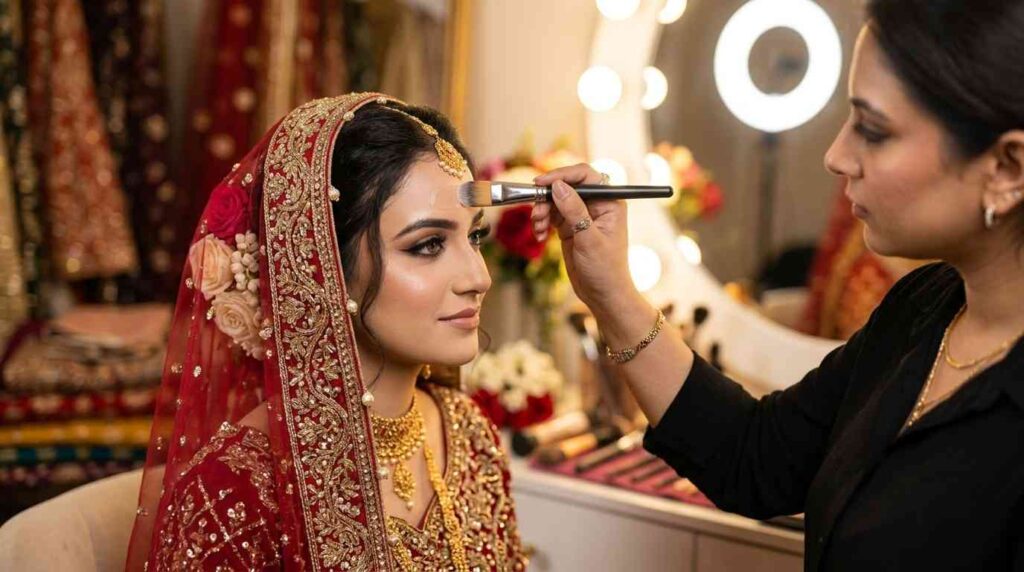
Why Skin Prep Matters More Than the Makeup Itself
Foundation performs differently on dry, dehydrated skin versus hydrated, smooth skin. On unprepared skin, powder looks chalky, liquid foundation emphasises texture, and concealer settles into fine lines within hours. On well-prepped skin, the same products blend seamlessly, last through emotion, sweat, and photography lights, and produce that lit-from-within glow every bride wants.
Skin preparation also directly affects colour payoff. Primers grip pigment. Moisturiser prevents foundation from breaking apart. A clean, exfoliated surface reflects light evenly, which is why brides who invest in prep consistently photograph better than those who invest only in expensive makeup.
The Pre-Bridal Skin Prep Timeline: What to Do and When
Great bridal skin is built over months, not overnight. Here is a realistic, achievable timeline tailored for brides in Islamabad and Rawalpindi.
Three to Six Months Before: Build Your Foundation
This is the stage most brides skip, and it is the stage that makes the biggest difference.
Consult a skin specialist. Book one appointment with a dermatologist or certified skin specialist. Identify your skin type, oily, dry, combination, or sensitive, and address any active concerns like melasma, acne, or uneven texture. Treatments like chemical peels, microdermabrasion, and professional facials work best when started early, because skin needs recovery time between sessions.
Establish a consistent daily routine. A four-step routine covers everything your skin needs at this stage: gentle cleanser, hydrating serum, moisturiser suited to your skin type, and broad-spectrum SPF 30 or higher applied every morning. Consistency matters far more than expensive products. Skin responds to routine over time.
Introduce targeted treatments gradually. Vitamin C serum brightens hyperpigmentation and boosts radiance over several weeks. Niacinamide reduces pore appearance and controls sebum. Retinol (if your skin tolerates it) improves texture and cell turnover. Start one new product at a time, and allow two to three weeks before adding the next, this way, if a reaction occurs, you know exactly which product caused it.
Hydrate from the inside. Skin that is dehydrated internally looks dull and thin regardless of what you apply topically. Drink six to eight glasses of water daily. Reduce processed sugar and dairy if breakouts are a consistent pattern. Foods rich in omega-3 fatty acids, almonds, walnuts, flaxseeds, support the skin barrier.
One Month Before: Refine and Stabilise
At this point, active treatments are wrapping up and your routine should feel familiar and comfortable.
Schedule your final professional facial. A hydrating or brightening facial at this stage gives skin a visible boost without the risk of a last-minute reaction. Avoid any aggressive treatment, strong peels, laser, or anything new — within four weeks of your wedding date.
Address hair removal timing. Facial threading, waxing, and dermaplaning must be timed correctly. Threading and brow shaping are best done two to three days before the wedding, never the morning of. Dermaplaning, which removes vellus hair (peach fuzz) and dead skin cells, works best one week before, it creates an extraordinarily smooth surface for foundation and primer.
Do a bridal makeup trial. A trial run is not optional for brides. The trial tells you how your skin reacts to the specific products your artist uses, whether primer and foundation are the right match for your skin type, and whether any adjustments are needed. If a product causes congestion or irritation during the trial, there is time to find an alternative.
Stop introducing anything new. The month before the wedding is not the time to test a new serum, mask, or cream. Stick to the routine your skin already knows.
One Week Before: Calm and Prepare
Exfoliate gently, once, not repeatedly. Use a mild chemical exfoliant (lactic acid or glycolic acid at a low concentration) or a gentle physical scrub three to five days before the wedding. Exfoliation removes the dead skin layer sitting on the surface, which allows primer and foundation to sit directly on fresh, smooth skin. Do not exfoliate the day before or the morning of, freshly exfoliated skin is temporarily sensitive and more reactive to makeup products.
Increase moisture. Apply a rich hydrating mask two or three times this week. Sheet masks with hyaluronic acid work well for most skin types. Well-hydrated skin plumps up fine lines, improves foundation blending, and gives a natural luminosity that no highlighter can replicate.
Avoid alcohol, late nights, and salty food. All three cause visible puffiness and dullness. Alcohol dehydrates skin cells. Poor sleep increases cortisol, which breaks down collagen and triggers inflammation. Salt causes fluid retention, particularly visible under the eyes. The week before the wedding is the time to prioritise sleep, water, and clean eating.
Do not squeeze or extract any breakout. A pimple that is squeezed becomes a red, inflamed wound that foundation cannot fully cover. Leave it alone. A targeted spot treatment with salicylic acid reduces the size significantly within 48 hours without creating trauma to the skin.
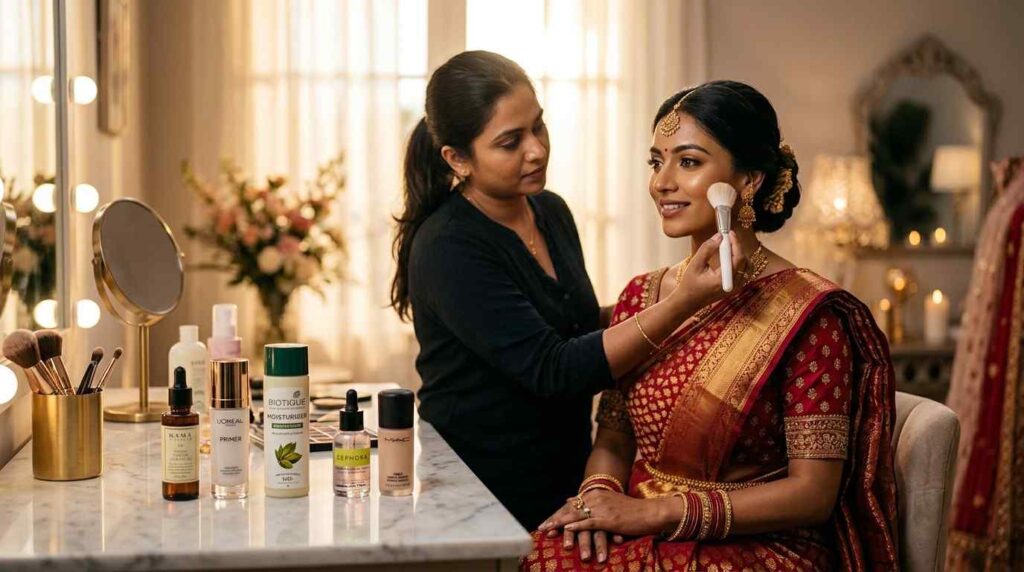
The Morning-of Skin Prep Routine: Step by Step
This is the routine to follow on your wedding morning, the two to three hours before makeup application begins.
Gentle Cleanse
Wash your face with a mild, hydrating cleanser. The goal is to remove overnight oil and skincare product residue without stripping the skin barrier. Use lukewarm water, hot water dilates capillaries and causes temporary redness. Pat dry with a clean, soft cloth. Do not rub.
Alcohol-Free Toner
Apply a hydrating, alcohol-free toner with a cotton pad or pat directly onto skin with clean hands. Toner restores pH balance after cleansing and prepares the skin surface to absorb the next layers more effectively. Rose water toner works well for most skin types and is calming on the day of high emotion.
Hydrating Serum
Apply two to three drops of a hyaluronic acid serum while skin is still slightly damp. Hyaluronic acid draws moisture from the air into the skin. On bridal skin, which will face studio lighting, photography flash, and hours under heavy makeup, this hydration layer is critical. Press gently into the skin rather than rubbing.
Eye Cream
Pat a small amount of eye cream around the orbital bone using your ring finger. The skin under the eyes is the thinnest on the face and the first area to show fatigue. Eye cream reduces puffiness, hydrates the delicate area, and creates a smooth base for concealer.
Moisturiser, Matched to Your Skin Type
This step is non-negotiable regardless of skin type.
- Oily skin: Use a lightweight, oil-free gel moisturiser. Skipping moisturiser on oily skin causes the skin to overproduce oil as a compensatory response, which is the opposite of what you want under bridal makeup.
- Dry skin: Use a richer cream or balm moisturiser. Dry skin without adequate moisture causes the foundation to look patchy and powdery within hours.
- Combination skin: Apply a light gel to the T-zone and a slightly richer formula to cheeks and jawline.
- Sensitive skin: Use a fragrance-free, barrier-repairing moisturiser. Ceramide-based formulas protect sensitive skin from the irritation that prolonged makeup wear sometimes causes.
Allow the moisturiser to absorb fully, at least five to seven minutes, before moving to the next step.
Sunscreen (For Daytime Ceremonies)
If your nikah or photo session is outdoors or in natural light, apply a lightweight SPF 30 or higher. Choose a sunscreen that is mineral or hybrid (not purely chemical, which can sometimes pill under primer). Allow it to settle for three to five minutes.
Makeup Primer
Primer is the bridge between skincare and makeup. Applied after all skincare has been absorbed, primer fills surface texture, controls oil production, and extends makeup wear significantly.
Choose primer based on your skin’s needs:
- Silicone-based primer fills pores and fine lines, ideal for photography-heavy days where smooth, airbrushed skin matters most.
- Hydrating primer with glycerin or hyaluronic acid, ideal for dry or dehydrated skin types.
- Mattifying primer. ideal for oily skin that tends to shine through foundation within hours.
- Colour-correcting primer. peach or orange-tinted options cancel discolouration before foundation, reducing the amount of concealer needed.
Apply primer thinly, even strokes across the full face. Allow it to become slightly tacky, this is the texture that grips foundation and keeps it in place. Rushing this step is one of the most common reasons bridal makeup fades early.
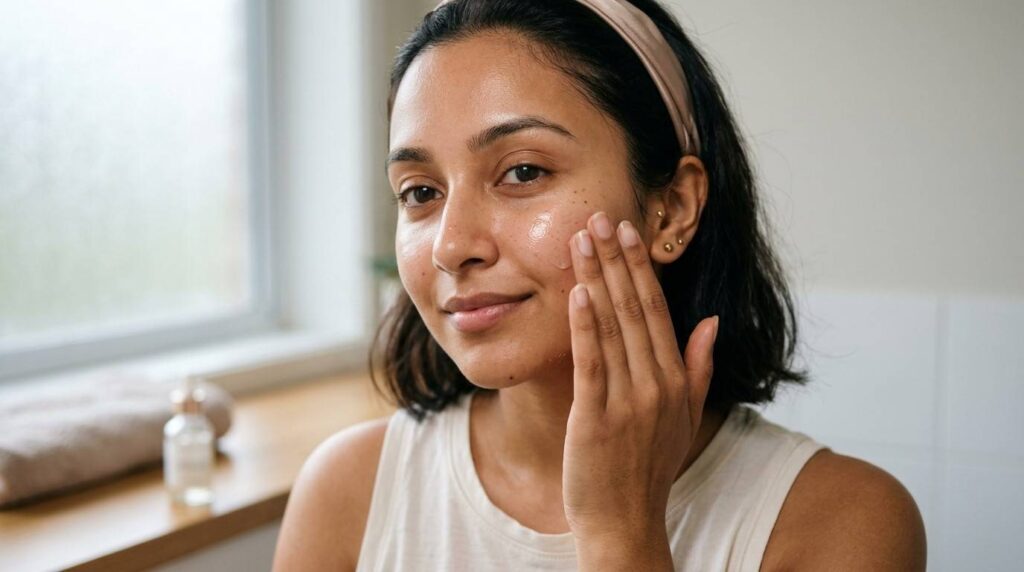
Skin Prep for Different Skin Concerns
Acne-Prone Skin
Avoid heavy occlusive products the morning of the wedding. Opt for non-comedogenic moisturiser and primer. Keep the skincare routine simple, cleanser, lightweight serum, oil-free moisturiser, and primer. Do not try to aggressively treat active breakouts on the wedding morning. Your makeup artist will address them with colour-correcting concealer.
Hyperpigmentation and Uneven Tone
The pre-bridal skincare routine should have addressed hyperpigmentation over the preceding months with consistent use of Vitamin C, niacinamide, or azelaic acid. On the morning of, a brightening serum with Vitamin C or kojic acid adds luminosity. A colour-correcting primer then neutralises any remaining discolouration before foundation application.
Dry or Dehydrated Skin
Dry skin needs layered hydration, not just moisturiser. Apply hyaluronic acid serum on damp skin, then seal it with a nourishing cream. A hydrating primer is essential. Ask your bridal artist to use a serum-infused or satin-finish foundation rather than a matte formula, which will emphasise dryness.
Oily Skin
The goal is not to strip oil but to balance it. A gentle cleanser, light gel moisturiser, and mattifying primer give oily skin the best base. Ask your bridal artist to set foundation with a translucent powder, especially around the T-zone, and to have blotting papers available throughout the day.
Common Skin Prep Mistakes Brides Make
Trying new products right before the wedding. New products carry real risk of allergic reaction or breakout. A product that causes an inflammation reaction the week before the wedding is far harder to manage than one that occurred three months earlier.
Over-exfoliating. More is not better. Exfoliating more than once or twice per week disrupts the skin barrier, causes sensitivity, and leads to redness that is difficult to hide under makeup.
Skipping moisturiser on oily skin. As mentioned earlier, dry and oily skin both need moisture. Skipping moisturiser on oily skin actively makes oil production worse throughout the day.
Applying too many products. Layering five or six different skincare products causes pilling and prevents foundation from adhering evenly. On the wedding morning, keep the routine to five steps maximum: cleanser, toner, serum, moisturiser, and primer.
Rushing the absorption time. Every skincare product needs time to absorb before the next layer. Applying primer over a moisturiser that has not fully set causes balling, uneven texture, and poor makeup grip. Allow three to five minutes between each step.
Sleeping in makeup the night before. The night before the wedding is not the night to skip cleansing. Clean skin overnight allows the barrier to repair and recover, so it is in the best possible state by morning.
What Your Bridal Makeup Artist Needs From You
A bridal artist at Shagufta Bridal begins every session with a brief skin assessment. Arrive with clean, well-moisturised skin and zero makeup. Disclose any skin sensitivities, product allergies, or active skin concerns before the session begins. The trial appointment is the right time to mention whether your skin tends to oxidise foundation (a common issue in Pakistan’s warm climate), break out under heavy makeup, or become excessively oily by afternoon.
Brides who communicate openly about their skin get results that align with what they actually envisioned, not just what worked on a different skin type.
FAQ:
How many days before a wedding should I do a facial?
A professional facial is best scheduled seven to ten days before the wedding. This gap allows any post-facial redness or breakout purging to resolve fully. Avoid facials within five days of the wedding date.
Can I apply moisturiser before bridal makeup?
Yes, moisturiser is an essential step before bridal makeup. Allow it to absorb for five to seven minutes before applying primer. Choose a formula suited to your skin type. Skipping moisturiser causes the foundation to cling unevenly to dry patches and increases the likelihood of cakey finish.
What should I put on my face before applying foundation?
The correct sequence is: cleanser → toner → serum → eye cream → moisturiser → SPF (daytime) → primer. This layered base creates the smoothest, most hydrated surface for foundation adhesion and longwear.
Is primer necessary for bridal makeup?
Primer is strongly recommended for bridal makeup. Bridal events last many hours, involve heat, emotion, photography, lighting, and often dancing. Primer creates a binding layer between skincare and makeup that significantly extends wear and prevents foundation from migrating or oxidising.
How do I make my skin glow naturally before my wedding?
Natural glow comes from consistent hydration, exfoliation, and a diet rich in antioxidants. Over the weeks before the wedding, increase water intake, use a Vitamin C serum daily, apply a hydrating sheet mask several times per week, and sleep at least seven hours per night. These lifestyle factors create a lasting radiance that no highlighter fully substitutes.
What should I avoid before bridal makeup?
Avoid alcohol (dehydrates skin), salty food (causes puffiness), new skincare products (risk of reaction), sun exposure without SPF (leads to tanning and irritation), aggressive facial treatments within two weeks, and squeezing any active breakouts.
How long before makeup should I do my skincare routine?
Complete your skincare routine at least 20 to 30 minutes before makeup application begins. This allows every layer to absorb fully and ensures primer adheres to settled skin rather than a slippery surface.
Does skin type change how I should prepare for bridal makeup?
Yes, significantly. Oily skin needs lightweight, oil-free products and a mattifying primer. Dry skin needs richer moisture and a hydrating or satin-finish primer. Sensitive skin needs fragrance-free, barrier-supporting products. Combination skin needs targeted application — lighter products on the T-zone and richer formulas on drier areas.
The Right Skin, the Right Makeup, the Right Result
Skin preparation is not a luxury reserved for brides with perfect complexions. It is the most practical investment any bride makes, regardless of budget, skin type, or how many days are left until the wedding. A well-prepped skin surface makes every product work better, last longer, and photograph more beautifully.
At Shagufta Bridal in Islamabad and Rawalpindi, every bridal makeup session is built on this principle. The best bridal looks we create begin weeks before the client sits in the chair, and they begin with exactly the routine described in this guide.
If your wedding is approaching, start with the fundamentals: cleanse, moisturise, protect, and prime. Build consistency before complexity. And if you want expert guidance on the exact products and treatments best suited to your skin, book a bridal consultation with us, we will assess your skin at the trial and ensure your makeup on the day performs exactly as it should.